Wine Chronicles: Lake County Makes Exceptional Wine. The World Hasn't Noticed
By Dan Berger

Summary: Lake County has much of what top wine regions require: volcanic red soils, high elevations, moderating lakes and a climate that supports ripeness without sacrificing acidity. Dan Berger traces how the county’s early national breakthrough came through sauvignon blanc, then widened as growers and outside players tested its potential for structured reds. He also details why cabernet can be complicated here, from intense UV exposure to a warm nighttime inversion layer that can shorten hang time and mute classic cabernet markers. Even with high-quality fruit and periodic bursts of outside attention, Lake County’s limited tourism infrastructure and inconsistent promotion have kept its reputation stuck in the “good-value” lane.

LAKE COUNTY, Calif. — To consistently produce world-class wines, several important vine-growing parameters must exist in a moderate-climate region. Many areas of central and northern California have met most of the criteria and are well known to wine-lovers.
The proof has been on display for several decades from Santa Barbara to the northern tip of Mendocino County and west of the state’s central range of mountains. In that precious strip of land, moderately warm climates keep vineyards warm enough to ripen grapes properly and the Pacific Ocean’s constant breezes keep vines cool enough to provide balancing acids.
High-quality wine has been widely recognized in dozens of sub-regions. Numerous excellent American Viticultural Areas are located in this superb vine-growing north-south region that’s headed by Napa, Sonoma and Mendocino counties. One other area has yet to gain its rightful recognition and might be considered as the next great star in the pantheon of California’s leading wine regions.
It is Lake County, and in several facets it has already proven itself. Its relative obscurity is partially due to the fact that it hasn’t promoted itself as aggressively as have other areas. Also, it has suffered some missed opportunities that have nothing to do with wine quality. Despite the high caliber of many of its wines, the lack of promotion has left the county with the reputation of a home for wines seen as “good-value” rather than world-class.

Another problem is that despite Lake County’s gorgeous vistas, it is not yet a tourist mecca. It unfortunately is just distant enough from San Francisco and Oakland that day trips are unlikely for most people. As for overnights, the county doesn’t have a huge number of hotels and restaurants to accommodate visitors.
As I drove home from a recent trip to the region, I realized how many of the requirements to produce a great wine exist in this often-overlooked area and for reasons that have not escaped many of the AVA’s grape-growers and winemakers. As they say correctly, Lake County has checked all the viticultural boxes.
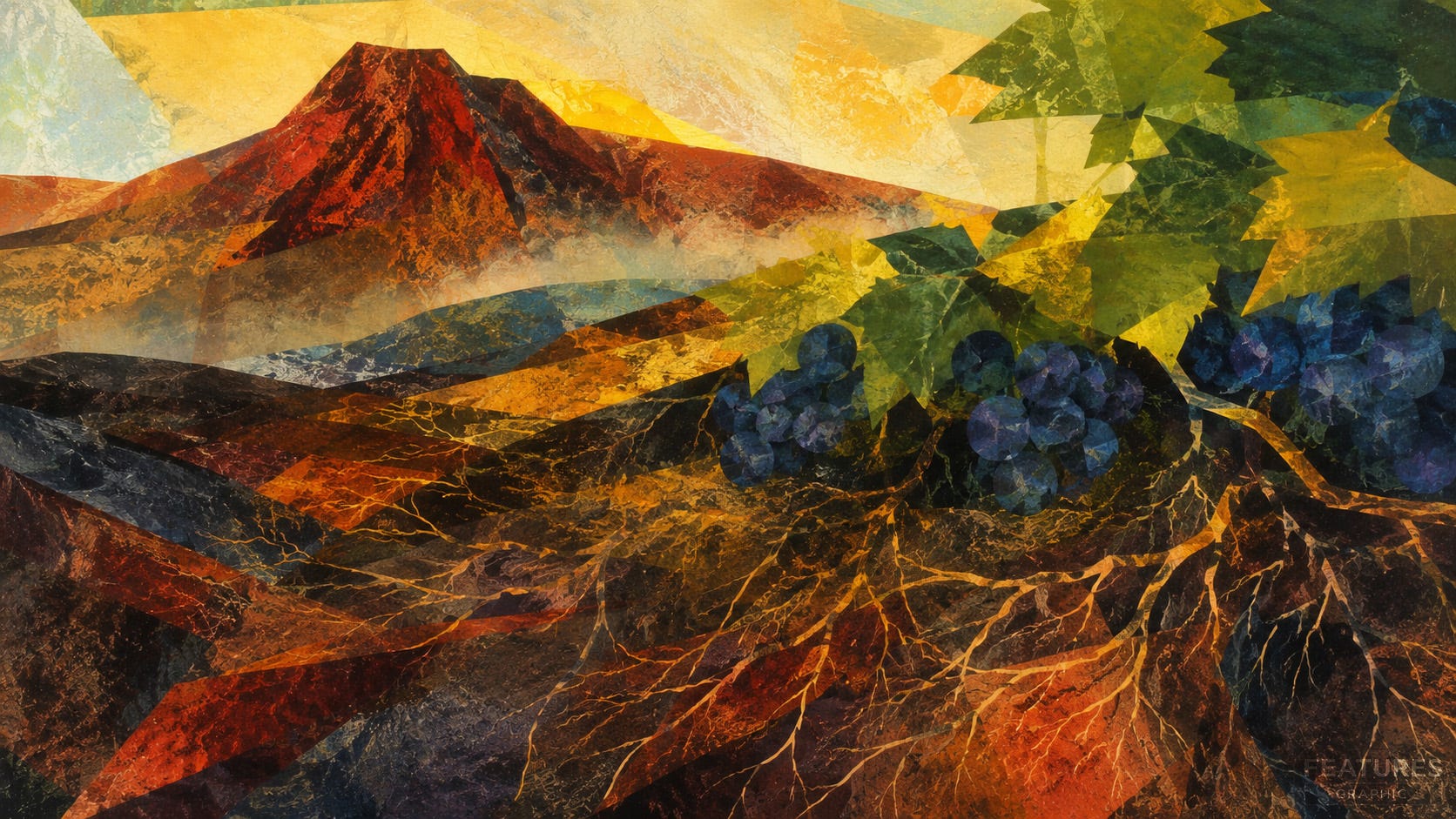
Good soils: Lake County has iron-rich red soils that are volcanic in composition. Such precious soils allow wines to be made that have superb structures based on minerally crispness. The soils remind me of one of Australia’s preeminent red wine regions, Coonawarra — a blessed place to grow grapes for age-worthy cabernet.
High altitude: Almost all Lake County wine grapes are planted at 1,500 feet or higher; some of the best vineyards are as high as 3,000 feet and thus have cool nights so grapevines can retain natural acidity levels. (Exceptions are noted below.)
Large bodies of water: It isn’t called Lake County by happenstance! An old wine truism is that great wine regions need large bodies of water to moderate extreme cold temperatures in winter and provide cooling during the warmest days of summer. The positive influence of large Clear Lake is beneficial for grapevines year-round. And the county has several dozen other smaller lakes. Clear Lake sits at 1,329 feet, yet locals know it as “semi-warm.”
Rainfall: Even though Lake County gets slightly more precipitation than its famed neighbor to the south (Napa), rains here rarely pose danger to grapes as they ripen. Problems like bunch rot or mildew are less likely than in other areas.
Humidity: In some “wine-country areas” around the world, humid conditions can create rot in vineyards. Lake County has few issues with humidity.
In almost every aspect, Lake is perfectly situated to make great wine. It displays all the requirements to produce a wide range of styles from a multitude of varieties. Which is why, after speaking with several growers and winemakers, it was easy for me to see why these people continue to be a little mystified the world has yet to recognize the greatness of Lake County wines.
Lake County’s first major breakout as a source for world-class wine occurred primarily because of its white wine grapes. One of the first to discover this was a Sonoma County winery, roughly 50 years ago. A young man by the name of David Rosenthal was working alongside winemaker Jill Davis at Buena Vista winery in the Sonoma Carneros district. The winery produced a Euro-classic style of sauvignon blanc from its own cool-climate vineyards.
Rosenthal, who had lived in Lake County, persuaded Davis to acquire some of Lake’s sauvignon blanc fruit and keep it separate from her estate-grown Carneros SB fruit. The new Lake version of Buena Vista SB turned out to be amazingly successful nationally. For several years, Buena Vista’s sauvignon blanc from Lake County fruit grew in volume and yet kept selling out annually; it was a national hit.
Soon other wineries outside the county saw that Buena Vista’s successful SB was coming from Lake County fruit. This eventually unveiled opportunities with other Lake grapes. But then fate intervened.
In the late 1980s, Buena Vista winery owner Marcus Moller-Racke unexpectedly announced at a Christmas party for employees that he wanted Buena Vista to emphasize its Carneros heritage. He told the assembled workforce that among other changes he was abandoning Lake County sauvignon blanc. He said Buena Vista’s Carneros-grown SB would henceforth be the primary source for that variety.
Although Lake County had benefited from having other wineries’ attention for its SB, the county went another decade before a major outsider realized that Lake County could produce superb wines from other grapes, as well. And although red wine grapes did extremely well in Lake County, it was the white grapes that gained early accolades for their quality and good value.
About the same time that Buena Vista was still making fine SB from Lake-grown fruit, in the early 1980s a San Francisco attorney and his wife founded a tiny winery in the Highland Springs area of Lake County at an altitude of 1,365 feet off Matthews Road. They called it Chateau du Lac. It was there that the couple began to make chardonnay from local grapes.
The name of that property was eventually changed to the last names of the husband-wife owners. Her last name was Kendall, his was Jackson.
One of the first outsiders to recognize the potential for red wines from Lake County was the late Mike Martini, grandson of the founder of Napa Valley’s Louis M. Martini Winery just south of St. Helena.
Martini, who had recently taken over full-time winemaking responsibilities from his father, Louis Peter Martini, had continued the winery’s tradition of making beautifully structured red wines that aged for decades because of impeccable balance. The wines were rarely very dark in color and always had moderate alcohol levels. Wine collectors knew how well the Martini wines developed.
In the 1950s and 1960s, one of the best wines Martini produced was from the Italian grape Barbera, a high-acid cultivar that benefits from time in bottle. From the 1960s through the mid-1970s, Martini’s Barbera had always been composed of between 51% Barbera grapes blended with other varieties, including petite sirah and gamay. The percentage of Barbera almost never went above 55%.
During that time, U.S. regulations only required 51% of the named grape on a varietally labeled bottle of wine. But in 1976, the federal government changed the regulation to 75%. Mike Martini knew that he had to increase his Barbara vineyard acreage if he was going to continue to put Barbera on the front label.
About 1980, while chatting with Mike, I asked him how he planned to solve the problem of going from 51% Barbera to 75%. I wondered if he would plant more Barbera in Napa Valley. He said he had planted Barbera vines in Lake County at an altitude that gave him perfect varietal aromatics and good acidity. In particular, he said, the fruit wasn’t as expensive as the grapes growing in Napa.

He also said he was testing cabernet there, but he added that the aromas he was getting from that planting differed from Napa cabernets. He said that even though high-altitude vineyards usually are cool at night, a warm inversion layer kept his Lake vines warmer than at a comparable height in Napa.
And here is where the story begins to shift. Although Lake County abuts Napa just to the south and although growing conditions appear similar, Lake is noticeably different in several aspects. And one of them is specific to Napa’s most famous grape variety.
Historically, great cabernet sauvignon as well as the greatest red Bordeaux (which is made primarily from cabernet sauvignon) has a slight but noticeable aroma of what is called pyrazine, which is slightly leafy, or bell pepper-y, and “green-scented.” It has an almost vegetative component that cabernet purists not only desire but expect. But some people have been taught to dislike it.
Pyrazine is native to cabernet sauvignon as well as all of the other so-called Bordeaux varieties, including merlot as well as one of the parents of cabernet sauvignon, the underrated cabernet franc. Pyrazine in those grapes tends to be less obvious.
Pyrazine can dominate some cabernets when they are very young, noticeably when the grapes are grown in cold or windy regions. However, this element has a tendency to diminish over time. When a young cabernet displays a strong amount of what some people say are “the veggies,” the wine is often disparaged as being particularly terrible.
People who understand and appreciate traces of pyrazine are rarely as reproachful of it. Bordeaux-lovers know that time will cure the aroma and that some of these wines will develop beautifully. I have had fabulous examples of wines that smelled a bit herbaceous when they were young but which developed handsomely with time in a wine cellar.
Of all the winemakers in California who understood the necessity for a bit of pyrazine in a quality cabernet, Martini was one of the most knowledgeable. His father and grandfather, both sensational and instinctive winemakers, had exposed him to Napa cabs and merlots dating back to the 1930s, and he appreciated that pyrazine was not to be vilified — that great Napa cabs needed a trace of it. Without any pyrazine, a cabernet was deficient.
My wife and I got to know Mike and his wife, Jacqui, for more decades before Mike’s untimely passing in 2023. We often spent New Year’s Eves at their beachfront home in Dillon Beach on the Sonoma coast, where Jacqui made pizzas and Mike opened numerous bottles of older Martini cabernets.
On many occasions we chatted about Mike’s Lake County cabernet vineyards. He said that although he loved the grapes he was getting from his Lake ranch, they did not provide very much cabernet personality. The wines were not as “cabernet-like” as he preferred. He said soil and climate conditions mitigated against pyrazine, which I would’ve thought would benefit the “new style” of cabernets that became so popular in the 1990s and later.
While researching this article, I spoke with a highly respected North Coast viticultural specialist. He said that Martini was correct — Lake County cabernets often had less pyrazine than cabernet purists prefer.
In talking with four Lake County winery principles, one thing was mentioned several times. Lake’s climate includes a lot of ultraviolet sunlight, which makes grape-growing a little trickier than in other regions. In recent years, said two of the growers, the supposedly “tried and true” trellising system that is widely used to grow grapes here since about 1990, vertical shoot positioning, was actually diminishing much of the pyrazine, so cabernets here weren’t really as “cabernet-like” as they might have been.
Peter Molnar of Obsidian Wine Co. said the “all-purpose” VSP trellising system ideally should be modified here (and elsewhere in the state). Many vines needed additional foliage to protect grapes from direct sunlight. He said many grape-growers are shifting away from the “open” systems that ripen fruit easily and are creating larger leaf canopies, “sort of like the old California ‘sprawl’ that we used a long time ago,” he said, to protect grapes from excessive direct sunlight.
One of the potentially greatest moments for Lake County grape-growing came more than a decade ago when one of the most successful growers in the Napa Valley, Andy Beckstoffer, planted significant acreage of red grapes in the Red Hills area of Lake County and immediately began promoting the high quality of Red Hills red wines.
But one of the problems was that the region had yet to establish itself either for high-quality or for great value red wines. So Beckstoffer offered to give existing wineries an acre of fruit without charge to prove that fine wine could be made here.
Because of Beckstoffer's reputation, the project drew lots of attention. Esther Mobley, wine editor of the San Francisco Chronicle, wrote in January 2016, "So promising is this area, he [Beckstoffer] believes, that it's only a matter of infrastructure (restaurants and tasting rooms to lure wine tourists) and exposure (high-visibility winemakers) before the world understands the potential of the Red Hills for cabernet."
The slow start to Beckstoffer’s quest didn’t faze him. Three years later, he purchased more acreage in the Red Hills AVA and was only in need of quality producers to prove that Lake was the next great red wine-growing area in the state. But moving into a new growing region has its drawbacks. One of those was what Martini told me a decade earlier about nighttime vineyard temperatures.

The North Coast viticultural consultant I interviewed was asked about Martini’s concerns.
"'Yes, Mike was right,' the consultant said. 'Lake County's nighttime inversion layer can be quite warm up to about 1,800 feet, which doesn't really exist in the Napa Valley.'"
He said the warm inversion layer accelerates sugar development and shortens the time the grapes have on the vine, which can accelerate sugar development, and may reduce grape maturation.
“We’re beginning to see people picking cabernet grapes in August,” he said, “so there’s not as much time for the fruit to mature on the vine. So there’s less of the herb and tobacco characteristics that make cabernet smell and taste like cabernet.”
The consultant said Beckstoffer “did almost everything right” in his quest to develop Lake County as a potential home as a great red wine growing region.
“It was a very sound, intelligent business plan,” said the viticultural expert. “It was very customer-oriented with great service. He wanted to be a top-rate supplier of blend-able cabernet to other wineries, and he was growing some good fruit. But there has been such a contraction in the [wine] business, and virtually nothing is selling these days.”
The consultant said he was told that Beckstoffer was pulling out several hundred acres from his Lake County project. The growers I recently interviewed verified that they had heard that Beckstoffer would be pulling out well over 1,000 acres of vines.
The consultant said he has heard of several projects in which high-quality Lake County fruit might end up being utilized in low-alcohol or zero-alcohol products that are achieved by new technologies to create quality table wines that are aimed at consumers seeking such wines. He said that to make these wines, many products will have to be affordable, and Lake County vineyard land is much less expensive than either Napa or Sonoma.

Roughly two dozen of the county’s 35 wineries are members of the Lake County Winery Association, which next year celebrates 20 years of promoting the area’s features. But membership is far from unanimous.
A few larger wineries have made a significant impact on the slowly increasing tourism. One of the most visible winery operations was established two decades ago by Napa escapee Clay Shannon, who established the Shannon Mercantile 30 years ago. It is an elegant project where visitors can try several of Shannon’s broad range of wines.
The Mercantile in Lakeport is part of a growing multifaceted enterprise that includes “taco Tuesday,” reasonably priced tastings, music and restaurant, the Shannon Ranch lamb, where the Shannons also farm grass-fed sheep. Among several wine brands are Buck Shack, Shannon Ridge, the recently acquired Steele, and others.
In the last 40 years, I have tasted numerous Lake County wines and have seen them change in style. As newcomers have moved to the area, wine styles have grown from modest at the start to bigger and richer.
In a subsequent article, I will give my views on the best styles of Lake County wines that are currently available as well as my views on how the county might best make use of its volcanic soils as the entire industry recovers from a serious sales decline from which everyone is suffering.
—
Dan Berger has been writing about wine since 1975.
Wine Discovery:
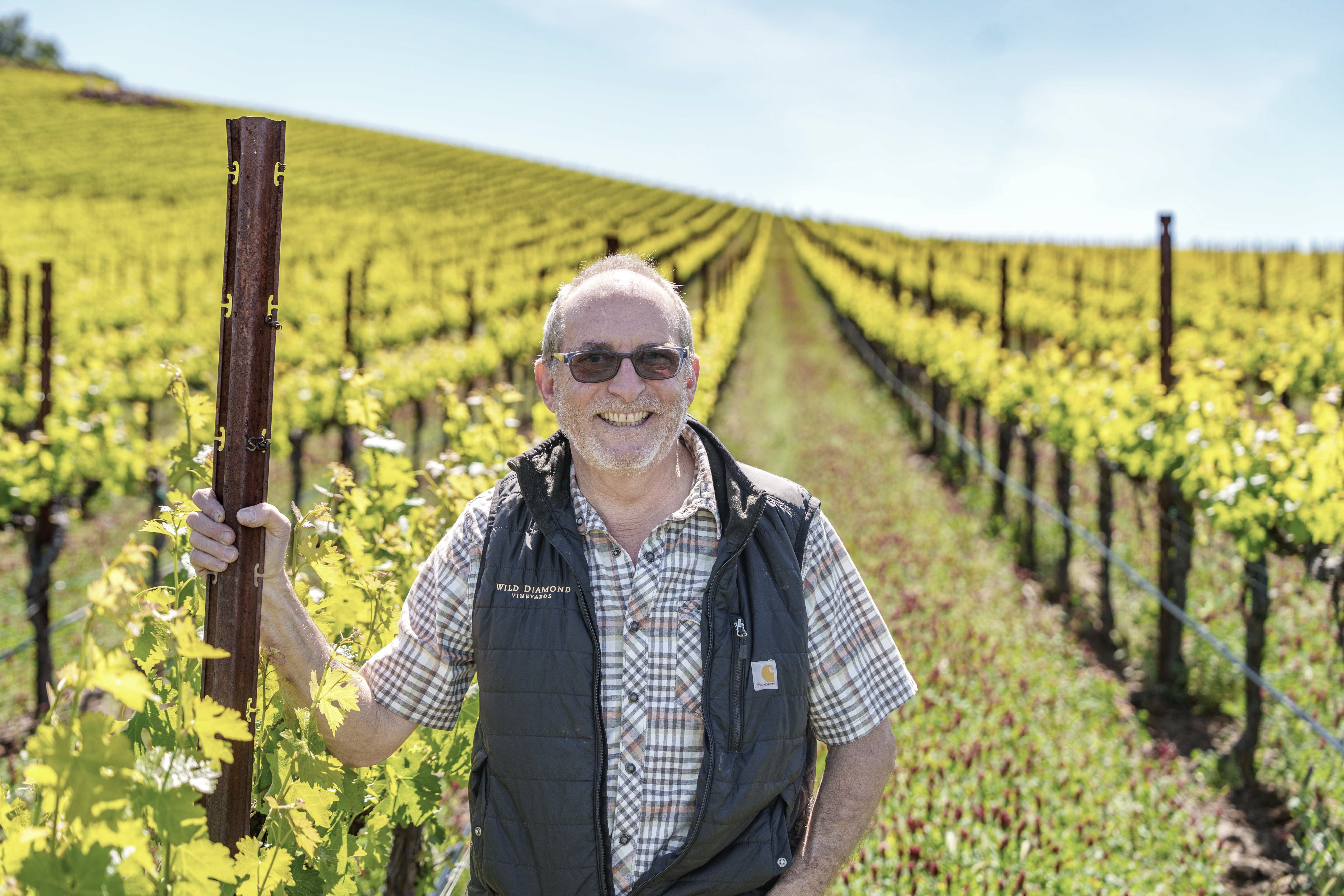
2025 Wild Diamond Sauvignon Blanc ($40. 120 cases made) — Wild Diamond Vineyards grows this estate Sauvignon Blanc in the hills above Hidden Valley Lake, where high-elevation volcanic soils and cool nights help build freshness, texture and aromatic clarity.
Winemaker Bruce Regalia brings a long North Coast resume to the project, including work associated with Duckhorn, Goldeneye and Calistoga’s Madrigal Wines. Regalia applies that vineyard-first experience to Lake County fruit, bottling exceptional estate-grown Bordeaux varieties and blends under the Wild Diamond label.
The 2025 Sauvignon Blanc opens with grapefruit, Meyer lemon and lime zest, joined by green apple, white peach and a light note of bourgeon de cassis. The palate is dry and clean, with medium body, crisp acidity and a subtle volcanic-stone character that carries into a distinct saline finish. The 13.2% alcohol. Pair with goat cheese salad, oysters, ceviche, tarragon chicken or Thai dishes with lime and cilantro. — Tim Carl Review
Explore These Related Articles:


Browse All Lake County Features Stories
Browse All Napa Valley Features Stories
Browse All Sonoma County Features Stories
—
The views, opinions and data presented in this article are those of the author and do not necessarily reflect the official policy, position or perspective of Napa Valley Features or its editorial team. Any content provided by our authors is their own and is not intended to malign any group, organization, company or individual.